How Retaining Walls Protect Fargo Properties from Erosion and Drainage Problems
Retaining walls are often one of the most overlooked features in residential landscaping. Many homeowners think of them as decorative additions or a way to create raised flower beds, but their true purpose goes far beyond appearance. A properly designed retaining wall is an engineered landscape feature that helps manage soil, control water, improve drainage, and protect your property from long-term damage.
In Fargo, West Fargo, and throughout eastern North Dakota, retaining walls are particularly valuable because of the area's unique climate and terrain. Heavy spring snowmelt, freeze-thaw cycles, intense summer rainstorms, and naturally shifting soils all place stress on landscapes. Without proper erosion control and drainage management, even relatively flat properties can experience soil movement, standing water, damaged hardscapes, and declining plant health.
Whether you're planning a complete landscape renovation or trying to solve a persistent drainage problem, understanding the role of retaining walls can help you make informed decisions about your property.
What Is a Retaining Wall?
A retaining wall is a structure designed to hold back soil while creating stable changes in elevation. Instead of allowing soil to naturally slope, retaining walls create level areas that are both functional and attractive.
Retaining walls are commonly used to:
- Support sloped landscapes
- Prevent soil erosion
- Create level outdoor living areas
- Improve drainage
- Build raised planting beds
- Protect patios and walkways
- Increase usable yard space
Although many retaining walls become beautiful focal points within a landscape, their primary purpose is structural.
Why Retaining Walls Are Important in Fargo
North Dakota's weather creates conditions that make proper landscape engineering especially important.
Throughout the year, Fargo properties experience:
- Heavy snow accumulation
- Rapid spring snowmelt
- Freeze-thaw cycles
- Saturated soils
- Summer thunderstorms
- Seasonal ground movement
These conditions can gradually weaken slopes, wash away soil, and place pressure on existing landscape features.
Even properties that appear relatively flat may have subtle elevation changes that affect drainage.
A retaining wall helps stabilize these areas while directing water where it belongs.
Preventing Soil Erosion
One of the primary functions of a retaining wall is controlling erosion.
Without support, gravity and water naturally move soil downhill. During heavy rains or spring thaw, loose soil can wash away surprisingly quickly.
Common signs of erosion include:
- Exposed tree roots
- Mulch washing into lawns
- Gullies forming after storms
- Bare soil patches
- Sloping planting beds
- Uneven landscape surfaces
Over time, erosion doesn't just affect appearance—it can compromise plant health, drainage patterns, and nearby hardscape features.
Retaining walls help stabilize vulnerable areas by securely holding soil in place.
Improving Drainage Throughout the Landscape
Water management is one of the biggest landscaping challenges facing Fargo homeowners.
Poor drainage can lead to:
- Standing water
- Muddy lawns
- Foundation concerns
- Plant disease
- Hardscape movement
- Mosquito breeding areas
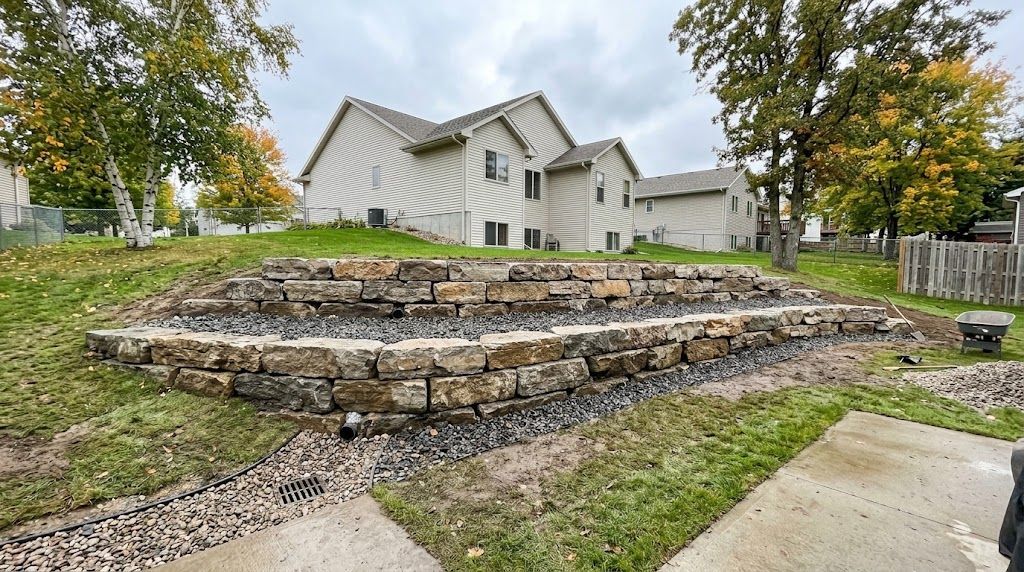
Retaining walls are often designed with integrated drainage systems that safely move water away from important structures.
These systems may include:
- Drainage aggregate
- Perforated drainage pipe
- Filter fabric
- Weep holes where appropriate
- Controlled water discharge
Rather than trapping water, properly engineered retaining walls relieve hydrostatic pressure while protecting the surrounding landscape.
Creating More Usable Outdoor Space
Sloped yards often limit how homeowners can use their property.
Without retaining walls, it may be difficult to install:
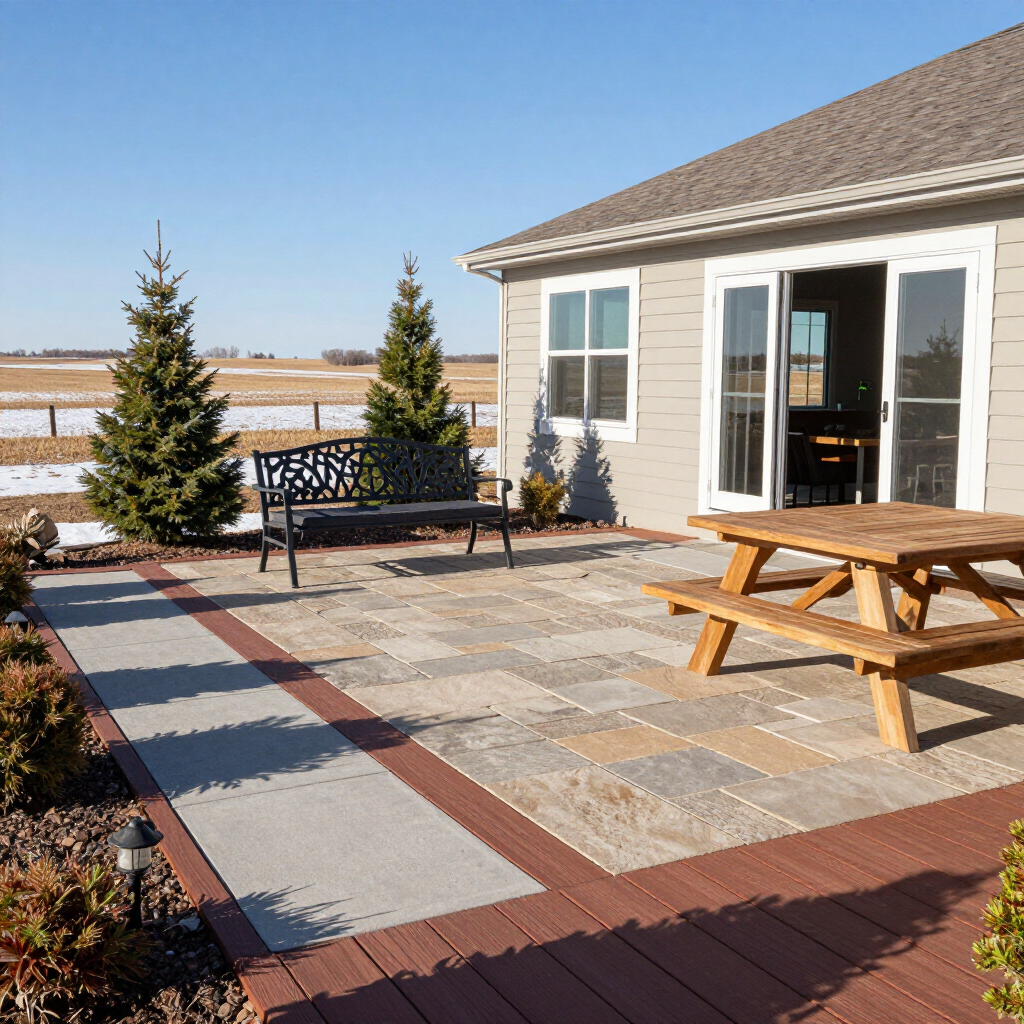
- Patios
- Outdoor kitchens
- Fireplaces
- Seating areas
- Play spaces
- Gardens
By creating level terraces, retaining walls transform difficult slopes into functional outdoor living areas.
Many homeowners are surprised by how much additional usable space becomes available after a retaining wall is installed.
Protecting Patios and Walkways
Hardscapes perform best when the surrounding soil remains stable.
If nearby slopes begin to erode or shift, patios and walkways may eventually experience:
- Settling
- Cracking
- Uneven surfaces
- Separation between pavers
- Water pooling
Retaining walls help support adjacent hardscapes by preventing surrounding soil movement.
This contributes to longer-lasting patios, sidewalks, and outdoor gathering spaces.
Supporting Healthy Plant Growth
Plants require stable soil conditions to thrive.
When erosion continually removes soil or water collects excessively around roots, plants become stressed.
Retaining walls create planting areas that offer:
- Improved soil stability
- Better moisture control
- Easier maintenance
- Greater planting flexibility
- Reduced washout after storms
Raised planting beds also improve accessibility while adding visual interest to the landscape.
Managing Freeze-Thaw Cycles
One of the biggest challenges in North Dakota is repeated freezing and thawing.
As water freezes, it expands.
When this occurs behind poorly constructed retaining walls, pressure builds rapidly.
Without proper engineering, walls may begin to:
- Lean forward
- Crack
- Separate
- Bulge outward
- Collapse
Professional retaining wall construction accounts for these seasonal forces through proper drainage, reinforcement, and foundation preparation.
Common Retaining Wall Materials
Today's retaining walls are available in several attractive materials.
Segmental Concrete Block
This is one of the most popular choices for residential landscapes.
Benefits include:
- Excellent durability
- Freeze-thaw resistance
- Multiple color options
- Engineered strength
- Minimal maintenance
Natural Stone
Natural stone provides timeless beauty and blends well with traditional and rustic landscapes.
Advantages include:
- Unique appearance
- Exceptional longevity
- Natural texture
- Strong visual appeal
Boulder Retaining Walls
Large natural boulders create an informal appearance that complements many North Dakota landscapes.
They work particularly well for:
- Larger properties
- Naturalized settings
- Drainage improvements
- Decorative slope stabilization
Signs Your Property May Need a Retaining Wall
Not every property requires a retaining wall, but certain warning signs suggest one may be beneficial.
These include:
- Soil washing downhill
- Sloped lawns that are difficult to mow
- Standing water near slopes
- Leaning garden beds
- Exposed roots
- Settling patios
- Drainage issues after heavy rain
- Uneven landscape surfaces
A professional evaluation can determine whether a retaining wall is the most effective solution.
Retaining Walls Add Visual Interest
Although retaining walls are functional structures, they also contribute significantly to landscape design.
They help define outdoor spaces while creating depth and dimension.
Design opportunities include:
- Curved walls
- Integrated seating
- Raised planting beds
- Accent lighting
- Natural stone caps
- Decorative stairways
Rather than appearing purely structural, retaining walls often become focal points that enhance the entire landscape.
The Importance of Professional Engineering
Retaining walls may appear simple, but they involve complex structural considerations.
Professionally designed walls account for:
- Soil pressure
- Water movement
- Frost depth
- Wall height
- Slope angle
- Drainage
- Base preparation
- Reinforcement requirements
Walls that are not engineered correctly often fail prematurely, resulting in expensive repairs.
Maintenance Requirements
Properly installed retaining walls require relatively little maintenance.
Homeowners should periodically:
- Inspect for movement
- Keep drainage outlets clear
- Remove excessive vegetation growing within joints
- Watch for signs of erosion
- Check surrounding grading after major storms
Routine inspections help identify small issues before they become major repairs.
Planning for Future Landscape Improvements
Retaining walls are often incorporated into larger landscape renovations.
Planning ahead allows homeowners to coordinate walls with future additions such as:
- Outdoor kitchens
- Fireplaces
- Patios
- Walkways
- Landscape lighting
- Water features
A comprehensive design creates a more cohesive landscape while avoiding unnecessary reconstruction later.
Why Local Experience Matters
Retaining walls that perform well in southern climates aren't always suitable for North Dakota.
Local soil conditions, frost depth, drainage requirements, and seasonal weather patterns all influence design decisions.
Working with a local company like MGI Landscapes & Outdoor Living ensures retaining walls are designed specifically for the Fargo area's environmental conditions. Their understanding of local construction practices, drainage management, and outdoor living design helps homeowners protect their investment while creating attractive, long-lasting landscapes.
Frequently Asked Questions
Do all retaining walls require drainage systems?
Most professionally built retaining walls include drainage components. Proper drainage reduces water pressure behind the wall and significantly extends its lifespan.
Can retaining walls solve drainage problems?
Retaining walls often improve drainage when combined with proper grading and drainage systems. However, every property requires an individual evaluation to determine the most effective solution.
How long do retaining walls last?
Professionally installed retaining walls constructed with quality materials can last several decades when properly maintained.
Are retaining walls only for steep properties?
No. Even properties with modest elevation changes can benefit from retaining walls to improve drainage, create level outdoor spaces, and prevent erosion.
Can retaining walls increase property value?
Yes. Well-designed retaining walls improve both functionality and curb appeal, making outdoor spaces more attractive and usable.
Final Thoughts
Retaining walls do far more than create attractive landscape features—they provide essential structural support that protects your property from erosion, improves drainage, stabilizes soil, and expands usable outdoor living space. In Fargo and West Fargo, where changing seasons and challenging weather conditions place constant stress on landscapes, a professionally designed retaining wall can prevent costly problems while enhancing the beauty and functionality of your yard.
Whether you're addressing drainage concerns, creating space for a new patio, or planning a complete landscape renovation, investing in a properly engineered retaining wall provides lasting benefits that extend well beyond appearance.
Ready to Transform Your Outdoor Space?
Bring your vision to life with MGI Landscapes & Outdoor Living.
Let’s create an outdoor space you’ll love.
Recent Posts