Do You Need a Permit for Hardscapes or Outdoor Kitchens in Fargo, ND?

Planning a hardscape project or outdoor kitchen is an exciting step for many Fargo and West Fargo homeowners. Whether you’re adding a new patio, retaining wall, or fully equipped outdoor cooking area, one important question often comes up early in the process:
Do I need a permit?
Permits are commonly associated with home additions or interior remodeling, but many outdoor projects are also subject to local regulations. In North Dakota’s climate—where frost depth, soil movement, and drainage are major considerations—permits play an important role in ensuring outdoor structures are safe, durable, and built correctly.
Understanding when permits are required helps homeowners avoid delays, fines, and expensive corrections. This guide explains how permits apply to hardscapes and outdoor kitchens in Fargo, what factors influence approval, and why proper permitting protects your investment.
Why Permits Apply to Outdoor Projects
Permits are designed to protect homeowners, neighbors, and the community. They ensure that construction meets safety standards, zoning requirements, and building codes.
For outdoor projects, permits typically address:
- Structural integrity
- Fire and utility safety
- Drainage and grading
- Property setbacks and easements
- Compliance with local zoning rules
In Fargo, permits also help ensure projects are built to withstand freeze-thaw cycles and long winters, reducing the risk of structural failure.
Do All Hardscape Projects Require a Permit?
Not all hardscape projects require permits, but some do depending on
size, height, location, and function. Understanding these factors is key.
Hardscape projects that may require permits include:
- Retaining walls over a certain height
- Structural seating walls
- Staircases with multiple risers
- Elevated patios or decks
- Hardscapes that alter drainage patterns
- Structures built near property lines or easements
Smaller, ground-level patios or walkways often do not require permits, but exceptions apply based on design and location.
Retaining Walls and Permit Requirements
Retaining walls are among the most commonly regulated hardscape features. Because they hold back soil and can affect drainage and stability, many municipalities require permits once walls exceed a certain height.
Permits for retaining walls help ensure:
- Footings extend below frost depth
- Adequate drainage systems are installed
- Wall systems are engineered for soil pressure
- Long-term structural stability
In Fargo’s freeze-thaw environment, improperly built retaining walls can fail quickly, making permitting especially important.
Patios, Walkways, and Seating Areas
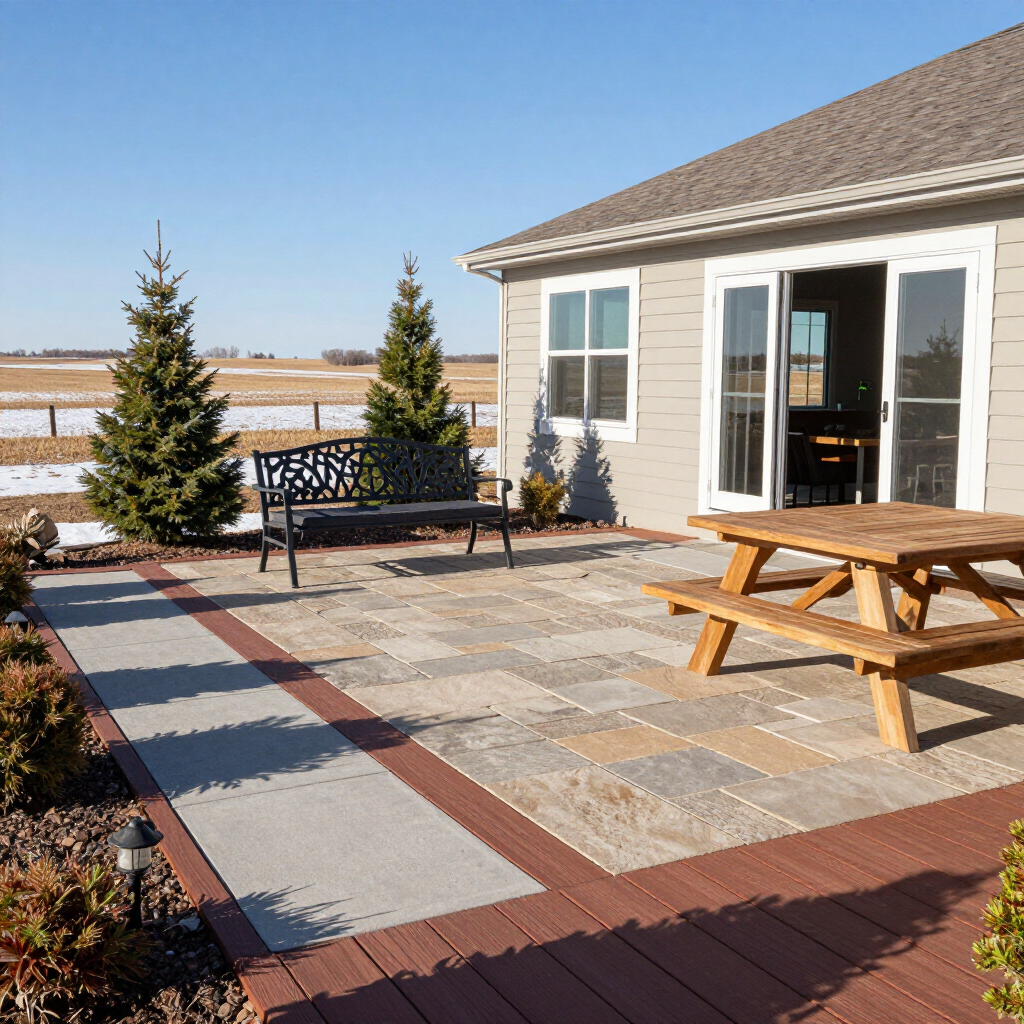
Most basic patios and walkways do not require permits when they are:
- At ground level
- Not attached to the home
- Not affecting drainage or utilities
However, permits may be required if:
- The patio is elevated
- It connects to a structural component of the house
- It significantly alters grading
- It includes built-in structural elements
Even when permits are not required, projects must still comply with zoning and drainage rules.
Outdoor Kitchens and Utility Permits
Outdoor kitchens are more likely to require permits because they often involve utilities. Even relatively simple outdoor kitchens can trigger permit requirements depending on what is included.
Permits are commonly required for:
- Gas line installation
- Electrical wiring and outlets
- Plumbing and water connections
- Permanent appliances
- Roofing structures or enclosures
Gas and electrical permits are particularly important due to safety concerns. Inspections help ensure connections are installed correctly and meet code.
Outdoor Fireplaces and Fire Features
Fire features are another area where permits often apply. Regulations vary depending on fuel type, size, and proximity to structures.
Permits may be required for:
- Permanent outdoor fireplaces
- Gas-powered fire pits
- Fire features built near structures or property lines
Fire safety regulations help ensure proper clearance, ventilation, and fuel connections, reducing risk to property and occupants.
Zoning Rules, Setbacks, and Property Lines
Even if a structure does not require a building permit,
zoning regulations still apply. Zoning determines where structures can be placed on your property.
Common zoning considerations include:
- Minimum distance from property lines
- Utility easements
- Distance from neighboring structures
- Height restrictions
- Visibility at intersections
Building too close to a property line or within an easement can result in required removal, even if the structure itself is well built.
Drainage and Grading Regulations
Drainage is a major concern in Fargo due to flat terrain and heavy spring snowmelt. Projects that change grading or redirect water may require review or approval.
Permits help ensure:
- Water drains away from foundations
- Neighboring properties are not affected
- Drainage solutions meet municipal standards
Poor drainage planning can lead to long-term property damage and liability issues.
What Happens If You Skip a Required Permit?
Some homeowners choose to proceed without permits to save time or avoid paperwork. This approach often leads to larger problems later.
Risks of skipping permits include:
- Fines and penalties
- Stop-work orders
- Forced removal or reconstruction
- Complications during resale
- Insurance coverage issues
Unpermitted work may also need to be retroactively approved, which can be more expensive than permitting upfront.
How the Permitting Process Typically Works
While specific steps vary, most permit processes include:
- Submitting plans or project descriptions
- Review by local building or zoning departments
- Approval or requests for revisions
- Inspections during or after construction
Working with experienced professionals often simplifies this process and reduces delays.
Who Is Responsible for Obtaining Permits?
Responsibility for permits depends on the project and who is managing the work. In many cases, professional contractors handle permitting as part of the project scope.
This ensures:
- Plans meet local requirements
- Permits are obtained correctly
- Inspections are scheduled appropriately
- Documentation is completed properly
Homeowners should always confirm who is responsible for permits before work begins.
The Value of Working With Local Professionals
Navigating permit requirements can be confusing, especially when regulations vary by project type. Local expertise makes a significant difference.
A company like
MGI Landscapes & Outdoor Living understands Fargo-area regulations, common permit triggers, and how to design projects that comply with local codes from the start.
This reduces delays, prevents costly changes, and ensures long-term success.
Frequently Asked Questions
Do I need a permit for every hardscape project in Fargo?
No. Many ground-level patios and walkways do not require permits, but structural or utility-related features often do.
Can permits delay my project?
Permits add time upfront, but they often prevent longer delays caused by rework or compliance issues later.
What happens if I sell my home with unpermitted work?
Unpermitted improvements can complicate inspections, negotiations, and closing.
Final Thoughts
Permits for hardscapes and outdoor kitchens in Fargo are not obstacles—they are safeguards. They help ensure outdoor projects are safe, durable, and built to handle North Dakota’s challenging conditions. By understanding permit requirements early and working with knowledgeable professionals, homeowners can move forward confidently and protect their investment for years to come.
Recent Posts